You’ve seen the headlines. Plastic in the oceans. Microplastics in drinking water. Whales washing ashore with stomachs full of trash. And yet, walk through any supermarket and plastic packaging is more dominant than ever. Concern about plastic and use of plastic are rising at the same time. How is that possible?
The answer involves chemistry the plastics industry would rather you didn’t think about, psychology it counts on, and a recycling system that’s been sold as the solution while it quietly fails.
Let’s zoom in — and then zoom out.
What’s Actually in Plastic Packaging (And Why It Matters for Your Skin)
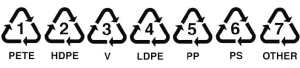
Plastic isn’t just plastic. More than 13,000 chemicals are associated with plastics and plastic production, and the UN Environment Programme flags about 3,200 of them as chemicals of concern — linked to cancer, hormone disruption, reproductive harm or aquatic toxicity.[1]
Many are additives: plasticizers, stabilizers, colorants and flame retardants that give plastic its flexibility, clarity, color and durability. The best-known plasticizers, phthalates, are used heavily in PVC and soft plastics. They are hormone disruptors, and they can seep out of plastic and into whatever it holds.[2]
When plastics were developed, the assumption was that these additives would stay locked inside. Decades of research have shown otherwise. Additives can migrate into food, drinks and cosmetics — especially products made with oils.
For a certified organic skincare company, that’s not a footnote. It’s a dealbreaker. What’s the point of a certified organic formula sitting in a container that can add chemicals to it?
The Two Fates of Every Piece of Plastic
Every piece of plastic eventually meets one of two ends: it’s burned, or it breaks down — slowly — into smaller and smaller pieces.
Burning, whether in open fires, incinerators or waste-to-energy plants, can turn plastic additives into even more harmful compounds such as dioxins. They drift through the air and settle on land and water.
Landfilling or ocean dumping only delays the problem. Plastic doesn’t disappear; it fragments into microplastics now found from ocean trenches to human blood vessels. In a 2024 study in The New England Journal of Medicine, researchers found plastic particles in the artery plaque of more than half the patients studied. Those patients had a higher rate of heart attack, stroke or death during follow-up.[11] The study shows an association, not proof of cause — but it’s the kind of finding that should make all of us pause.
Meanwhile, animals mistake plastic for food. A sperm whale stranded on a beach, stomach packed with plastic, dead of starvation — that image is not an anomaly.
The larger threat is quieter: plastic chemicals entering the food chain. Aquatic foods supply at least 20% of the animal protein for 3.2 billion people.[12] What goes into the ocean comes back to the table.

What About Bio-Plastics? (Spoiler: Not the Answer)
So-called bio-plastics, such as polylactic acid (PLA) and corn-starch plastics, are often marketed as eco-friendly. Most aren’t the fix they appear to be.
Many need industrial composting facilities to break down — conditions most communities don’t have. In a backyard, a landfill or the ocean, they can persist much like conventional plastic. And “plant-based” says nothing about the additives inside. Different label, same chemical question.
The Recycling Myth: How We Got Played
Recycling feels like the responsible choice. Sort your plastics, feel good, move on. The plastics industry has spent heavily to keep it feeling that way.
The reality: in 2021, the US recycled only about 5–6% of its post-consumer plastic waste.[5] The rest was landfilled, burned or shipped away.
The small share that does get recycled carries its own problem. Recycling melts down mixed plastics from countless sources, along with every additive and contaminant they carry, and the heat can create new toxic compounds. A 2023 Greenpeace review of the research concluded that recycled plastic often contains higher levels of toxic chemicals than new plastic.[3] That’s one reason most recycled plastic is “downcycled” into carpet and clothing fibers rather than food packaging.
Recycled bottles do exist. California now requires plastic beverage bottles to contain 25% recycled plastic, rising to 50% by 2030.[4] But even at 50%, half of every bottle is still brand-new plastic.
Here’s the darkest irony: recycling can make us use more. In a 2013 study, people given the option to recycle used more paper than people without it. After recycling bins were added to a restroom, paper-towel use per person went up.[6] Psychologists call the broader pattern moral licensing — doing one good thing feels like permission to keep doing the problematic one.
As consumers, we’re getting played. Recycling mainly helps sell more plastic.
The Health Question Nobody Is Talking About Loudly Enough
Aren’t the toxicity concerns overblown? People seem fine.
The research says otherwise. Phthalates are hormone disruptors.[2] In frogs, exposure to low, environmentally relevant levels of the phthalate DBP during development reduced survival and caused birth defects.[7] In another study, it disrupted sperm production and caused reproductive abnormalities in males.[8]
In people, two trends are hard to ignore:
- Puberty is starting earlier. In a 2024 Harvard study, average age at first period fell from 12.5 for women born 1950–69 to 11.9 for those born 2000–05. Researchers point to several likely causes, including childhood obesity, stress and endocrine-disrupting chemicals.[9]
- Sperm counts are falling. A 2023 global review found average sperm concentration dropped 51.6% between 1973 and 2018, and the yearly rate of decline has more than doubled since 2000.[10]
No single study pins these trends on plastic alone. But hormone-disrupting chemicals are a leading suspect, and plastic packaging is one of the most constant daily exposures most of us have. This is a slow-moving, well-documented, deeply inconvenient public health question.
Why the Industry Keeps Winning (For Now)
The plastics industry is large, profitable and politically sophisticated. Hundreds of thousands of jobs depend on plastic packaging and disposables, and investors have enormous stakes in the status quo.
Its strategy is layered and effective:
- Recycling as reassurance. Promote recycling enthusiastically. Let consumers feel responsible. Sell more new plastic.
- Legislative loopholes. California’s first plastic-bag ban still let stores hand out thicker plastic “reusable” bags, which added plastic rather than cutting it. The state closed that loophole in 2024: starting in 2026, the only checkout bag allowed is recycled paper.[13]
- Information management. Ad spending, search campaigns and industry-funded research keep friendly narratives at the top of the news cycle.
The parallels to the sugar and rum trades of the 1700s and 1800s are striking. Consumers buying desirable products were unknowingly funding the slave trade. Today, consumers buying plastic-packaged products are unknowingly funding environmental harm that will affect billions. The mechanisms — denial, economic entrenchment and slow public awakening — are remarkably similar.
The Good News: Paper Was Always the Answer
Plastic packaging took over supermarkets in the 1970s. By the 1980s, whole product categories came only in plastic. We’ve forgotten that yogurt once came in wax-coated paper cups — and they worked fine.
The technology to replace disposable plastic packaging already exists. Paper comes from plants and returns to the soil. Paper doesn’t shed microplastics or persist in ecosystems for centuries.
At Organic Essence, this wasn’t theoretical. It was personal.
When a young sperm whale stranded near our home on South Beach and died — its stomach filled with plastic — we were already a certified organic skincare company committed to clean formulations. But our packaging was plastic. We couldn’t unsee what we’d seen.
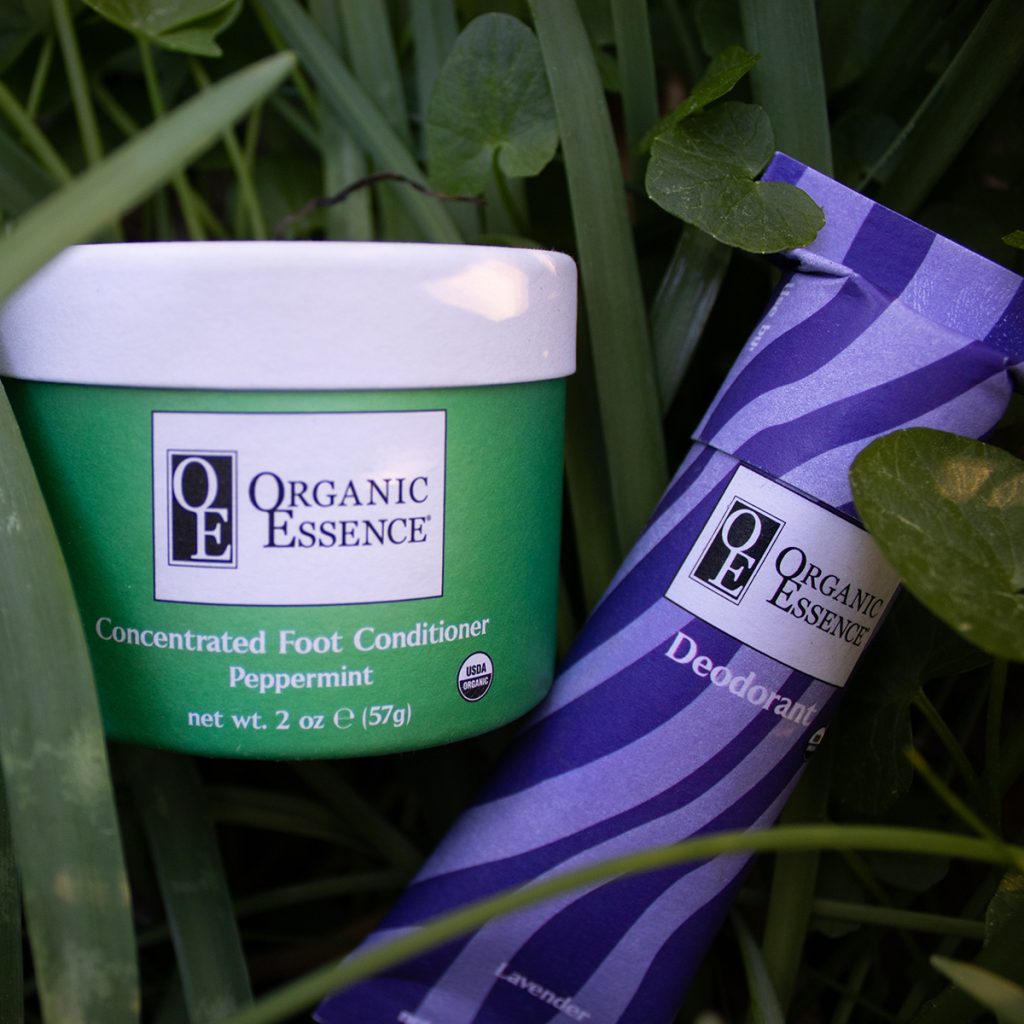
So we engineered our way out. Organic Essence developed the Eco Tube — home-compostable body care packaging — along with patented paper jars and tubes designed to return to the earth. The Eco Tube is made of nothing but printed paper and casein, a natural milk protein — no plastic linings, no plasticizers. No offsets. No recycling promises. Zero-waste, plastic-free packaging for certified organic body care — every part goes back to the soil.
What You Can Do Right Now
Sustainable packaging isn’t as hard or expensive as the plastics industry wants you to believe. The biggest obstacles are industry money and brand inertia — not technology.
Here’s how to push back:
- Vote with your wallet. When a plastic-free option exists, choose it — especially for skincare, personal care and food, where packaging chemicals can reach the product itself.
- Count the real cost. You’re a lifelong, daily consumer of packaging chemicals. That price doesn’t appear on any receipt.
- Call out your favorite brands. “I love your product, but I don’t want to buy your pollution.” Say it online. Say it to store managers. Brands respond to customer pressure because they have to.
- Share what you know. None of this is secret — it’s just outspent. Every conversation is a counter-move.
The shift away from plastic packaging will be disruptive. It will feel expensive at first, because a lifetime of marketing trained us to expect plastic-level prices. But the true cost of plastic — in damaged ecosystems, hormone disruption and contaminated food chains — is one we can’t afford to keep paying.
Ellery West is CEO and co-founder of Organic Essence and co-inventor of the Eco Tube. Organic Essence makes certified organic skincare and body care in patented, plastic-free, zero-waste paper packaging. For more on sustainable packaging, visit ecovisionpackaging.com.
Sources
- United Nations Environment Programme, Chemicals in Plastics: A Technical Report (May 2023), summarized by Food Packaging Forum
- Icahn School of Medicine at Mount Sinai, Phthalates fact sheet
- Greenpeace USA, Forever Toxic (May 2023)
- CalRecycle, Plastic Minimum Content Standards
- The Last Beach Cleanup & Beyond Plastics, The Real Truth About the U.S. Plastics Recycling Rate (May 2022)
- Catlin, J.R. & Wang, Y., “Recycling gone bad: When the option to recycle increases resource consumption,” Journal of Consumer Psychology 23(1), 2013
- Lee, S.K., Owens, G.A. & Veeramachaneni, D.N.R., “Exposure to low concentrations of di-n-butyl phthalate during embryogenesis reduces survivability and impairs development of Xenopus laevis frogs,” Journal of Toxicology and Environmental Health, Part A 68(10), 2005
- Lee, S.K. & Veeramachaneni, D.N.R., “Subchronic exposure to low concentrations of di-n-butyl phthalate disrupts spermatogenesis in Xenopus laevis frogs,” Toxicological Sciences 84(2), 2005
- Harvard T.H. Chan School of Public Health, “Menstrual periods are arriving earlier for younger generations” (May 2024), on a study in JAMA Network Open
- Levine, H. et al., “Temporal trends in sperm count: a systematic review and meta-regression analysis,” Human Reproduction Update 29(2), 2023
- Marfella, R. et al., The New England Journal of Medicine (March 2024), summarized by Healio
- FAO, The State of World Fisheries and Aquaculture 2024, executive summary
- Grocery Dive, “California governor signs SB 1053, updating plastic carryout bag ban” (2024)